





















Examining the Compiler Analogy: Are LLMs the Next Evolution in Programming Abstraction?
By
alpaylan

An everything bagel for the brain. Substantive, layered, well-seasoned.
Summary
The article explores the debate around whether Large Language Models (LLMs) are similar to compilers and whether we're moving toward a world where people no longer need to examine underlying code. It discusses the evolution of programming languages from low-level to higher-level abstractions, with LLMs potentially representing the next step where natural language becomes the programming interface. The author examines arguments for and against this compiler analogy, considering implications for software development, debugging, and the future role of programmers.
Key quotes
· 3 pulledComputer science has been advancing language design by building higher and higher level languages; this is the latest iteration: maybe we no longer need a separate language to express ourselves to machines; we can just use our native tongues
Are we headed toward a world where people don't look at the underlying code for their programs?
I've been going round and round in my mind about a particular discussion around LLMs: are they really similar to compilers?
You might also wanna read


Anthropic Releases Claude Opus 4.7 AI Model with 1M Context Window and Enhanced Coding Capabilities
Anthropic announces Claude Opus 4.7, their latest AI model featuring a hybrid reasoning architecture with a 1 million token context window.
 anthropic.com·2d ago
Anthropic Releases Claude Opus 4.7 AI Model with 1M Context Window and Enhanced Coding Capabilities
Anthropic announces Claude Opus 4.7, their latest AI model featuring a hybrid reasoning architecture with a 1 million token context window.
anthropic.com·2d agoIntegrating Type Systems into Neural Network Training for Reliable Code Generation
The article discusses the limitations of current neural network approaches to code generation, particularly how Large Language Models (LLMs)

Anthropic Releases Claude Opus 4.7 AI Model with Enhanced Coding and Creative Capabilities
Anthropic has released Claude Opus 4.7, its most powerful generally available AI model to date, which offers improvements over Opus 4.6 in a
 The Verge·1mo ago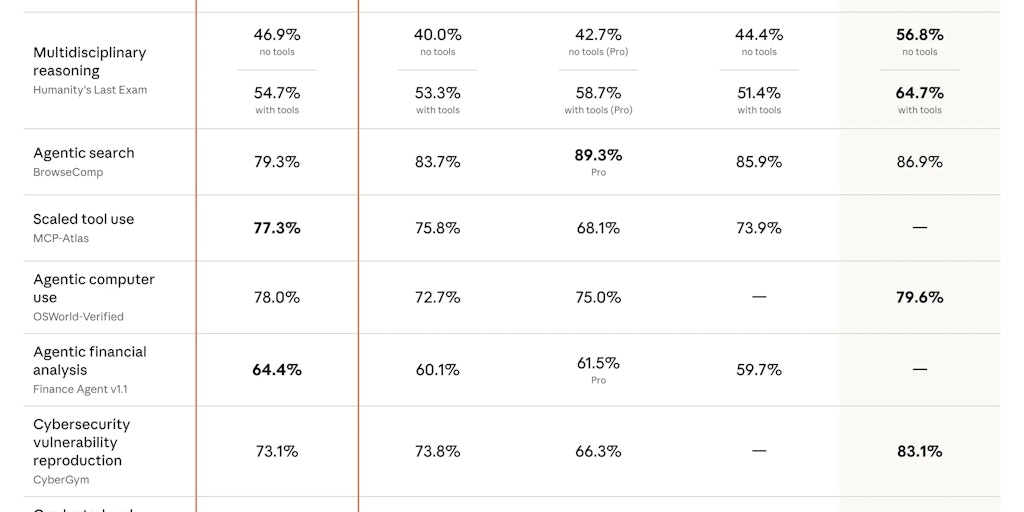
Anthropic Releases Claude Opus 4.7 AI Model for Complex Reasoning and Agentic Coding
Claude Opus 4.7 is Anthropic's most advanced generally available AI model, designed specifically for complex reasoning and agentic coding ta
 Product Hunt·1mo ago
Anthropic Releases Claude Opus 4.7 with Enhanced Software Engineering and Vision Capabilities
Anthropic has released Claude Opus 4.7, a significant upgrade to their AI model that shows notable improvements in advanced software enginee
anthropic.com·1mo ago