





















Evolution of Microscopy: From Leeuwenhoek to Super-resolution Techniques
By
rbanffy

The kind of bagel that ruins lesser bagels for you.
Summary
The article discusses the evolution of microscopy from the 17th century to modern times, highlighting the limitations of light microscopes and the advancements in super-resolution microscopy. It emphasizes the significance of advanced light microscopy in understanding human biology and disease processes.
Key quotes
· 4 pulledUsing a tiny, spherical glass lens sandwiched between two brass plates, the 17th century Dutch microscopist Antonie van Leeuwenhoek was the first to officially describe red blood cells and sperm cells in human tissues, and observe “animalcules” — bacteria and protists — in the water of a lake.
Increasingly powerful light microscopes followed, revealing cell organelles like the nucleus and energy-producing mitochondria.
When light passes through a lens, the light gets spread out through diffraction.
Advanced light microscopy techniques have come into their own — and are giving scientists a new understanding of human biology and what goes wrong in disease
You might also wanna read


Lumos-Nexus: A Training-Efficient Two-Stage Framework for High-Fidelity Video Generation with Reasoning Capabilities
Lumos-Nexus is a training-efficient unified video generation framework that addresses the computational challenge of integrating large high-
 arxiv.org·55m ago
European XFEL achieves milestone in superconducting undulator development for next-generation X-ray lasers
European XFEL has achieved a key milestone in developing superconducting undulators for X-ray free-electron lasers. A set of superconducting
 xfel.eu·1h ago
Feedback Distillation: A New Training Method for Improving LLM Reasoning in Theorem Proving
This paper introduces Feedback Distillation, a novel training method for reasoning models that improves upon standard GRPO (Group Relative P
arxiv.org·1h ago
Wider Neural Networks with Fewer Parameters Improve Performance by Reducing Feature Interference
This research paper demonstrates that increasing the number of neurons in a neural network without increasing the number of non-zero paramet
arxiv.org·2h ago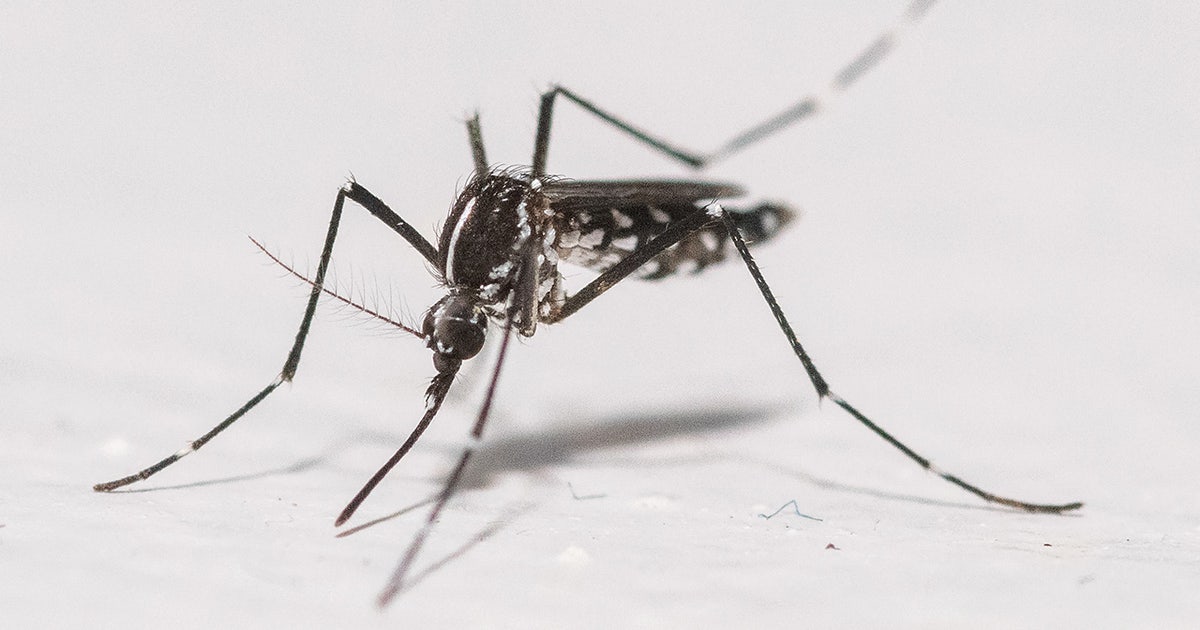
Google's Debug program seeks EPA approval to release 64 million modified mosquitoes in California and Florida
Google's Debug program plans to release up to 64 million genetically modified "good" mosquitoes in California and Florida over two years to
 bit.ly·3h ago
ARC Prize benchmark reveals AI systems score under 1% on spatial reasoning puzzles while humans achieve 100%
The article discusses the ARC Prize Foundation's May 2026 benchmark results showing that while humans scored 100% on a game-like AI test, th
 theconversation.com·3h ago