





















Why Germany's renewable energy leadership hasn't lowered household electricity prices
By
Liam Gilliver

Hot, fresh, and worth queueing round the block for.
Summary
Germany leads the EU in wind and solar energy generation, with 59% of its electricity from clean sources in 2025, yet German households pay about a third more for electricity than the EU average. This paradox stems from Germany's electricity pricing mechanism, which remains tied to volatile fossil fuel markets despite the high share of renewables. The article explores the structural and policy reasons behind this disconnect between renewable leadership and high consumer electricity costs.
Key quotes
· 3 pulledGerman households pay around a third more for electricity than the EU average, despite the country's impressive efforts to ditch fossil fuels.
According to energy think tank Ember, Germany is one of the 'global leaders' for wind and solar energy deployment, with 59 per cent of its electricity coming from clean sources in 2025.
Since the introduction of its landmark renewable energy law (Erneuerbare-Energien-Gesetz) in 2000, the country's share of generation from wind and solar alone has skyrocketed from less than two per cent to almost 45 per cent last year.
You might also wanna read

Europe's Renewable Energy Milestone: Wind and Solar Now Outpace Fossil Fuels in Power Generation
Europe has reached a significant energy milestone, with wind and solar power generation now surpassing fossil fuels for the first time. In 2
 e360.yale.edu·4mo ago
Germany's Electricity Prices Turn Negative on Easter Monday Due to Renewable Energy Surge and Low Demand
Germany experienced deeply negative electricity prices on Easter Monday due to a surge in renewable energy production (solar and wind) coinc
 bloomberg.com·2mo ago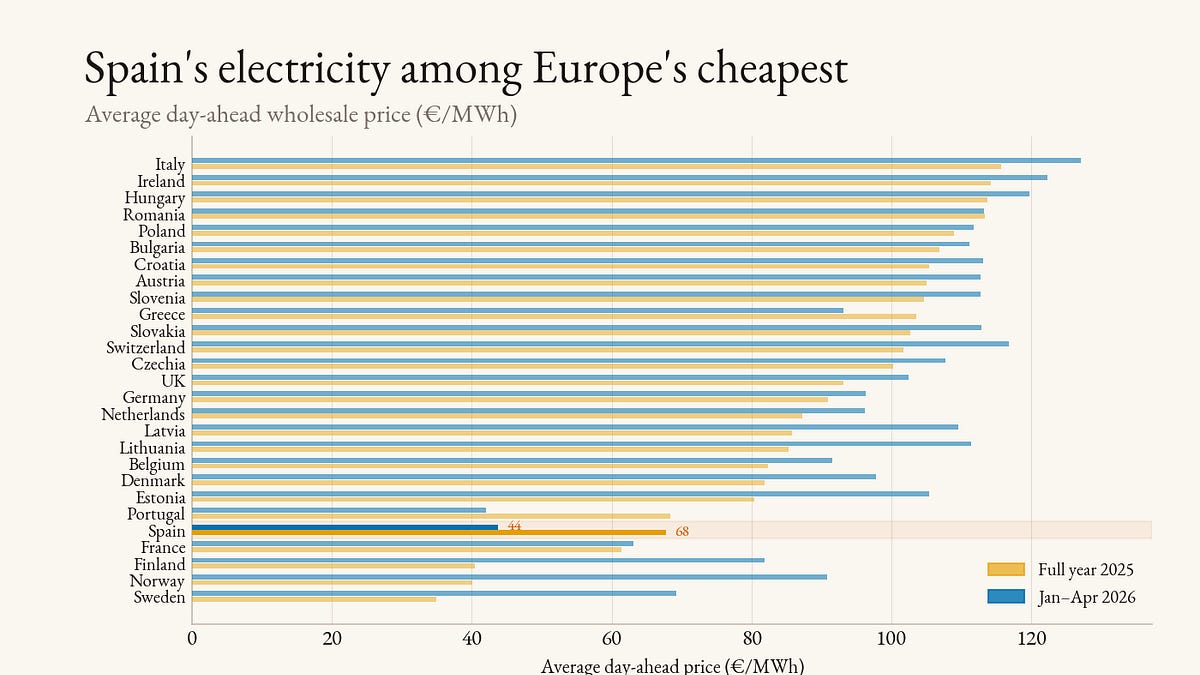
How wind and solar made Spain one of Europe's cheapest electricity markets
Spain's wholesale electricity prices have dropped dramatically to become among Europe's cheapest, averaging €44/MWh in early 2026 compared t
 Bright Spots·11d ago
How wind and solar made Spain one of Europe's cheapest electricity markets
Spain's wholesale electricity prices have dropped dramatically to become among Europe's cheapest, averaging €44/MWh in early 2026 compared t
Bright Spots·11d agoAnalysis: Tracking the Decoupling of German Electricity Prices from Natural Gas
This article examines whether German electricity prices have decoupled from natural gas prices, explaining that decoupling occurs when renew
Solar Becomes EU's Largest Electricity Source for First Time, Reaching 22% in June
For the first time, solar power became the largest source of electricity in the European Union in June, supplying a record 22% of the bloc's
e360.yale.edu·11mo ago