





















Critique of Market Economics: The Limitations of Invisible Hand Theory for Low-Income Households
By
camillomiller

Slow-proofed and worth the wait. Worth its weight in flour.
Summary
The article appears to be a critique of economic theory, specifically challenging the concept of the 'invisible hand' of the market. It argues that this logic fails to account for real-world financial pressures faced by people living paycheck to paycheck, suggesting that market forces don't adequately address immediate financial needs and unexpected expenses that arise during the month.
Key quotes
· 3 pulledthis logic implies that if people had the money to spend on services and they spent that money on services the invisible hand of the market would say "no, that's enough for me, I don't need to take any more"
this logic also implies that money recouped eventually is just as valuable to people who are living paycheck to paycheck as money taken at the beginning of the month
when people need to figure out how they are going to make it to the end of the month when, damn, the sink in the bathroom just sprung a leak
You might also wanna read


The Hidden Costs of the Upper Middle Class: Why Status Spending Is a Losing Game
The article argues that the upper middle class is caught in a financial trap where they pay high premiums for status markers (private school
 ofdollarsanddata.com·24d ago
White House economic director claims real wages rising despite inflation and high gas prices
National Economic Council Director Kevin Hassett downplays Americans' economic anxiety amid high gas prices and rising inflation during the
 abcnews.com·1h ago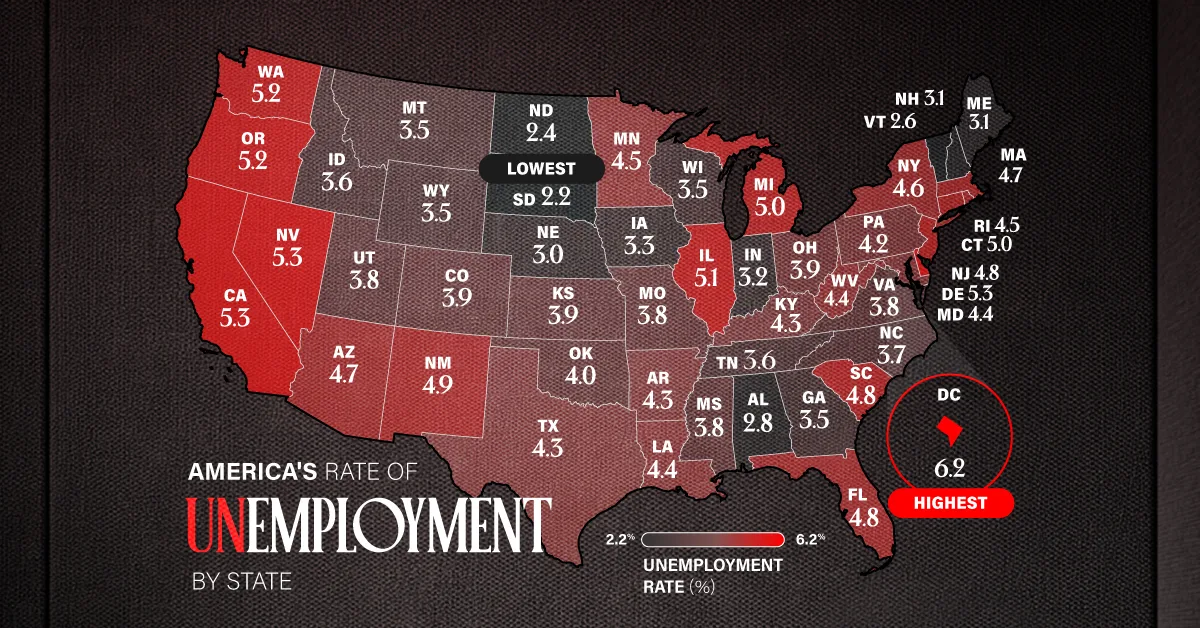
Mapping America's Unemployment Divide: California, Nevada, and D.C. Lead in Jobless Rates
The article presents a mapped visualization of unemployment rates across the United States, highlighting significant regional disparities. C
 visualcapitalist.com·2h ago
Tomato prices surge 40% amid tariffs, shipping costs, and crop issues, hitting consumers and businesses
Tomato prices have surged 40% over the past year, becoming a symbol of America's affordability crisis. The spike is driven by reduced crop y
 apnews.com·2h ago
American Consumer Sentiment Hits Lowest Level Since 1952 Amid Widespread Economic Dissatisfaction
The article examines the paradox of widespread American unhappiness and economic pessimism despite relatively strong macroeconomic indicator
 theatlantic.com·2h ago
Economist Chris Blattman warns of AI-driven layoffs and economic collapse risk, citing Trump policies as exacerbating factor
Economist Chris Blattman warns of "hard proof" of an impending economic collapse, citing "The AI Layoff Trap" as key evidence. He argues tha
 rawstory.com·5h ago