





















Study: Early Earth's Asteroid Impacts May Have Enabled Prebiotic Chemistry
By
Aaron Sidder

An everything bagel for the brain. Substantive, layered, well-seasoned.
Summary
A new study published in AGU Advances examines how asteroid and planetesimal impacts during Earth's Hadean and Archean eons (4.6 to 3.5 billion years ago) shaped the planet's crust and created environments conducive to prebiotic chemistry. Rather than being entirely hellish or tranquil, early Earth was a dynamic environment where frequent impacts caused localized melting and hydrothermal activity, potentially creating conditions that supported the chemical building blocks of life. The research suggests that impact bombardment, often viewed as destructive, may have actually played a constructive role in creating potential habitats for early life.
Key quotes
· 3 pulledNeither entirely hellish nor tranquil, early Earth was a dynamic environment frequently transformed by impact bombardment.
Asteroids and planetesimals regularly bombarded Earth between about 4.6 billion and 3.5 billion years ago, in the Hadean and Archean eons.
Frequent impacts from asteroids and planetesimals in Earth's earliest days shaped the planet's crust and created environments that may have supported prebiotic chemistry, and possibly even early life.
You might also wanna read

Understanding the Purple Earth Hypothesis: Early Earth's Purplish Biosphere
The Purple Earth Hypothesis suggests that early photosynthetic life on Earth used retinal instead of chlorophyll, giving the biosphere a pur
en.wikipedia.org·10mo ago
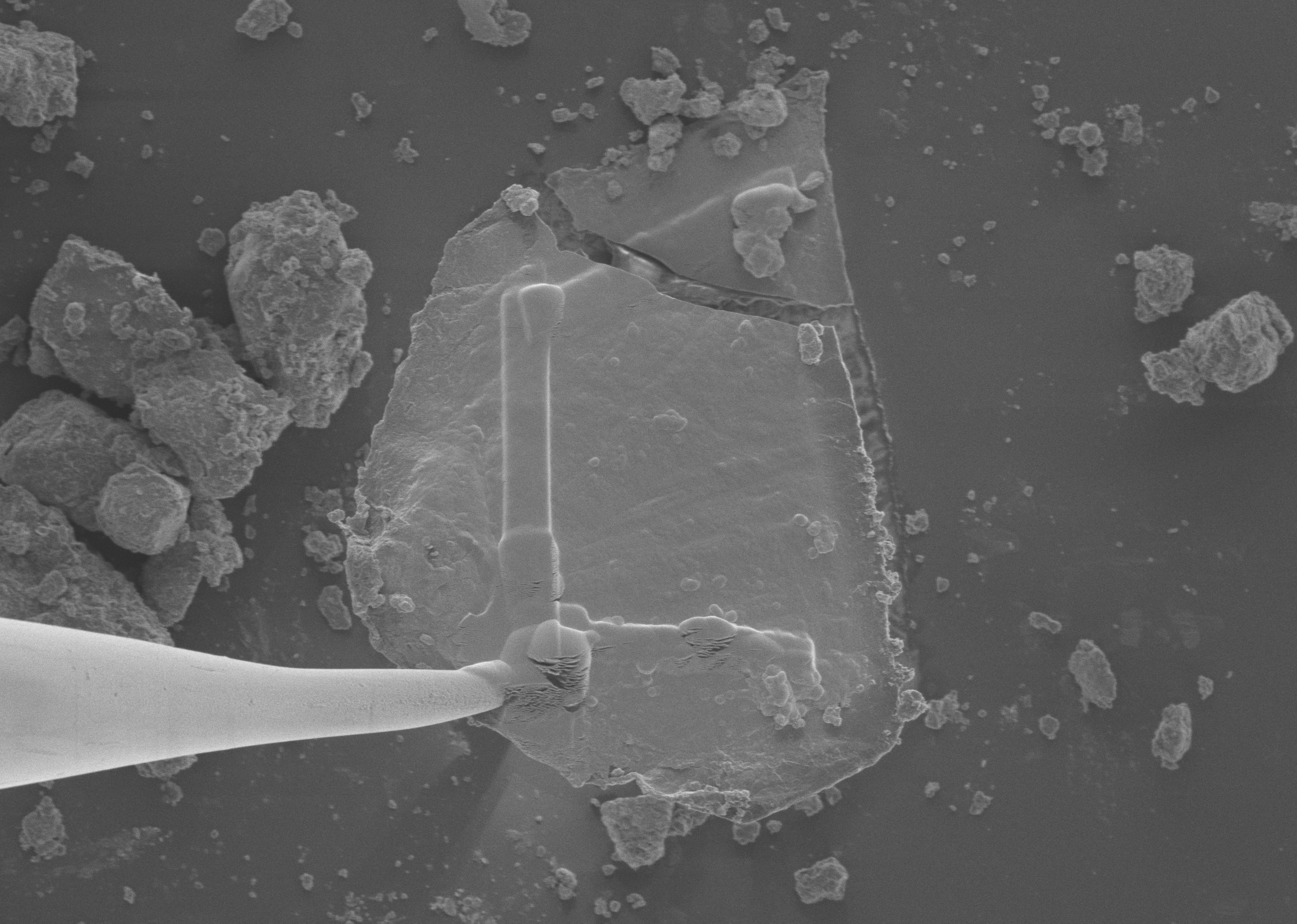
NASA Discovers Sugars and Unique Compounds in Asteroid Bennu Samples
NASA's OSIRIS-REx mission has delivered asteroid Bennu samples containing three significant discoveries: sugars essential for biology, a pre
 nasa.gov·6mo ago
NASA's Curiosity Rover Discovers Organic Compounds on Mars, Including DNA-Related Molecules
NASA's Curiosity rover has discovered more than 20 organic compounds in Martian rock samples from Gale Crater, including nitrogen-bearing mo
 courthousenews.com·1mo ago
Understanding the Origin of Theia: Evaluating Earth's Last Giant Impactor
The article discusses the dynamical origin of Theia, the last giant impactor on Earth, and evaluates the idea using dynamical simulations of
arxiv.org·11mo agoCosmic-ray bath in a past supernova gives birth to Earth-like planets

NASA research suggests Titan's hydrocarbon lakes could naturally form primitive cell-like structures
NASA research suggests that in Titan's methane and ethane lakes, simple molecules could naturally form vesicle-like compartments that mimic