





















Clado Launches Atlas: A Global People Search Platform for Teams
By
Tom Zheng

Hand-rolled, kettle-boiled, baked to perfection. Worth every minute at the bakery.
Summary
The article introduces Atlas, a new platform by Clado designed for advanced search and profile enrichment, offering access to over 800 million people profiles. It targets users in sales, hiring, and other fields requiring global people search capabilities.
Key quotes
· 3 pulledToday, we're introducing Atlas, our major leap towards perfect search over all humans.
Atlas is our all-in-one platform for SOTA deep research and profile enrichment – built around teams.
We put 800 million+ people profiles (and growing) at your fingertips with simple, agentic search.
You might also wanna read


Apple Plans to Launch Smart Glasses in Late 2027, Competing With Meta's Ray-Ban Wearables
The article discusses Apple's anticipated entry into the smart glasses market, reportedly launching in late 2027, directly competing with Me
 gizmodo.com·59m ago
European Commission explores new semiconductor factory as part of Chips Act 2.0 strategy
The European Commission, along with two R&D hubs, is exploring the establishment of a cutting-edge semiconductor factory in Europe as part o
 politico.eu·59m ago
Noctua partners with Carbice to distribute carbon nanotube thermal pads for AMD Ryzen CPUs
Noctua has announced a long-term partnership with Carbice, a U.S. company specializing in vertically aligned carbon nanotube thermal interfa
 videocardz.com·59m ago
Swindon emerges as a hub for Britain's drone industry with new MoD testing site
Swindon, a struggling British town, is being positioned as a hub for Britain's drone industry. The Ministry of Defence plans to build a dron
 econ.st·1h ago
Uber and Autobrains partner to launch Level 4 autonomous taxi fleet in Munich
Uber and the Israeli AI company Autobrains have announced a joint Robotaxi program in Munich, Germany. They plan to deploy a fleet of Level
 heise.de·1h ago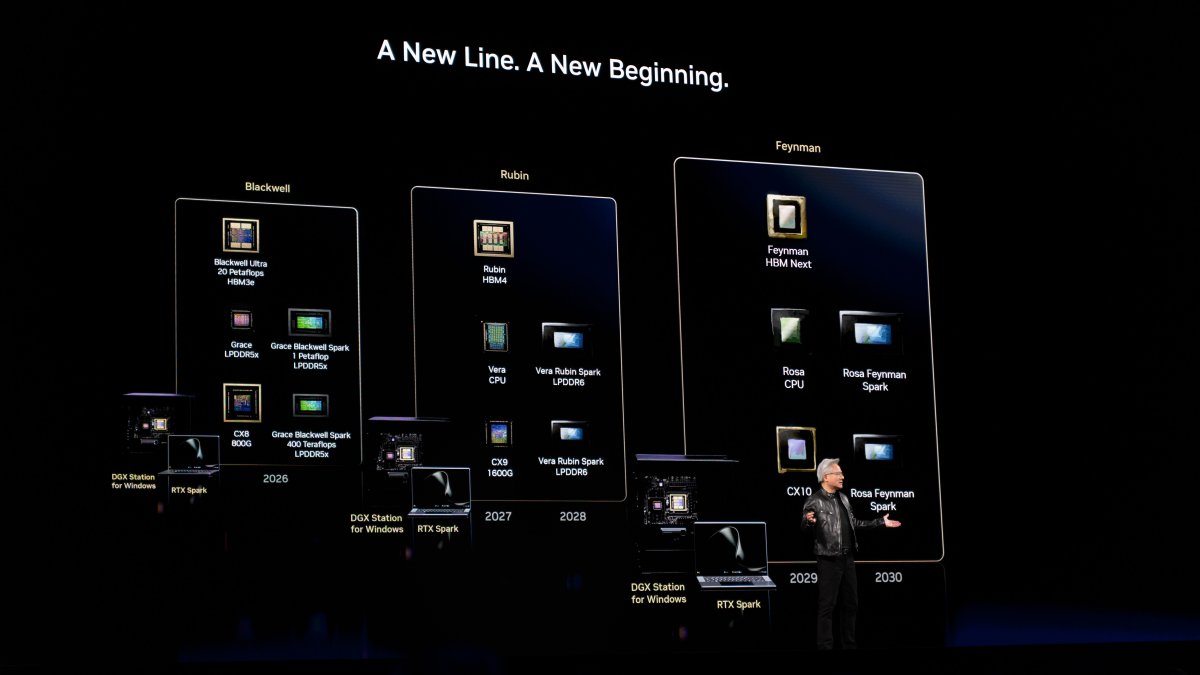
Nvidia stellt PC-Prozessor-Roadmap bis 2030 vor: Zwei neue Generationen geplant
Nvidia hat auf der Computex 2026 eine aktualisierte PC-Roadmap vorgestellt, die bis 2030 reicht. Nach dem ersten eigenen Notebook-Prozessor
heise.de·1h ago