





















Low-cost stratified subterranean trap for sampling soil macrofauna in Kalahari drylands
By
Walter R. Jubber

Hot, fresh, and worth queueing round the block for.
Summary
This article presents a low-cost, stratified subterranean trapping method developed for live capture of soil macrofauna in the sandy, dryland soils of the southern Kalahari. It addresses the understudied nature of soil invertebrates in drylands, which cover over 40% of global land mass and are typically nutrient-poor with coarse-textured soils. The method enables sampling of below-ground taxa and litter-dwelling invertebrates, providing a practical solution for studying biodiversity in these challenging environments.
Key quotes
· 3 pulledDrylands cover more than 40% of the global land mass and support a high level of biodiversity
Dryland soils are typically nutrient-poor, coarse-textured, with low organic matter and low water retention
Key but understudied components of the biotic communities in drylands are the soil invertebrates
You might also wanna read


Water-use strategy diversity and trait filtering in Bromeliaceae across coastal and inland inselbergs in the Atlantic Forest
This scientific study examines water-use strategies in Bromeliaceae plants growing on inselbergs (ancient rock outcrops) in the Atlantic For
 doi.org·2d ago
How Mountain Ecosystems Are Changing in a Warming Climate: Insights from Fossil Pollen and Personal Observation
This article uses the personal story of a grandfather visiting his Rocky Mountain cabin over decades to illustrate how mountain ecosystems a
 climateages.substack.com·3d ago
Otters as Bioindicators of Estuarine Health: Research Gaps and Future Framework
This scientific synthesis article examines otters as bioindicators for estuarine health monitoring. It highlights how otters serve as integr
 emt.pensoft.net·3mo ago
Mathematicians challenge dark energy model, suggesting cosmic acceleration may arise naturally from Einstein's equations
A team of mathematicians challenges the long-standing dark energy model, arguing that the model it was designed to rescue was never mathemat
 earth.com·27m ago
Massachusetts invests $25M in MIT's new Quantum Systems Laboratory for quantum computing research
MIT is launching a Quantum Systems Laboratory in Cambridge, backed by a $25 million state investment from Massachusetts. The facility aims t
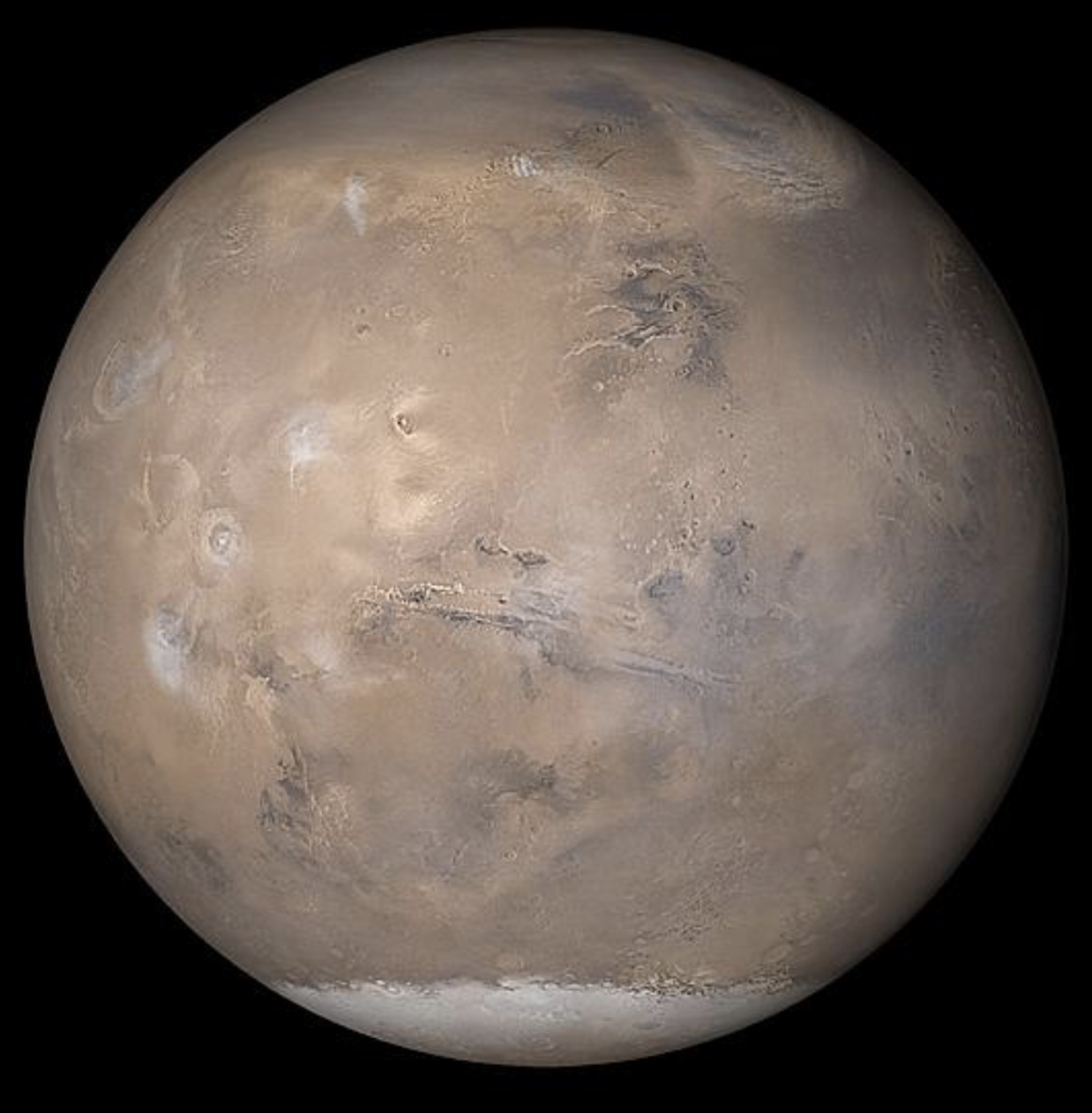
Viewing Mars as an Exoplanet: Lessons for Detecting Habitability from Afar
This scientific article explores what we could learn about Mars if we viewed it as an exoplanet—a distant world orbiting another star. The a
 astrobites.org·2h ago