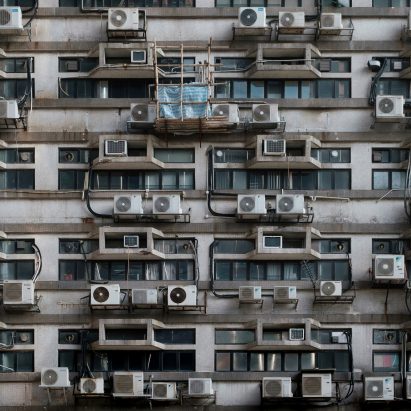
Heating buildings produces far more CO2 than cooling, but AC emissions are rising faster
By
by Andrew Moseman, MIT Climate Portal Writing Team
7h ago· 5 min readenNews

92/100
Golden Brown
Bagelometer↗
Crackling crust, pillowy middle. The kind of bagel that earns a second cup of coffee.
Score92TypenewsSentimentnegative
Summary
Heating buildings globally produces significantly more climate pollution than air conditioning, accounting for over 5 billion tons of CO2 annually (nearly 15% of all human CO2 emissions). However, emissions from air conditioning are rising at a faster rate. The article examines the comparative climate impact of heating versus cooling buildings, noting that while heating currently dominates emissions, the rapid growth of AC usage—especially in developing nations—is a growing concern.
Key quotes
· 3 pulledHumans are a Goldilocks species. There is a small band of temperatures where we feel comfortable, which is why societies spend tremendous amounts of energy heating or cooling our homes and other buildings.
Globally, heating creates much more climate pollution than air conditioning, and that's often true at the level of a single building too. But emissions from air conditioning are rising faster.
Over 5 billion tons of climate-warming carbon dioxide (CO2) a year, or close to 15% of all the CO2 emissions from humanity's...
Globally, heating creates much more climate pollution than air conditioning, and that's often true at the level of a single building too. But emissions from air conditioning are rising faster.