





















Building a Minimal ARMv7 Emulator from Scratch in Rust
By
xnacly

Crackling crust, pillowy middle. The kind of bagel that earns a second cup of coffee.
Summary
The article details the author's journey of building a minimal ARMv7 emulator called 'stinkarm' from scratch in Rust, with no external dependencies. The project aims to deeply understand ELF binary format parsing, ARM 32-bit instruction encoding, and assembly execution mechanics. The author explains the step-by-step process of creating the emulator, including parsing ELF headers, implementing ARM instruction decoding, handling memory management, and executing simple ARM assembly programs. The article serves as both a technical tutorial and personal learning experience, emphasizing the educational value of building low-level systems software without dependencies.
Key quotes
· 4 pulledTo fully understand everything: no dependencies. And of course Rust, since I already have enough C projects going on.
Emulating armv7 is surprisingly easy, even from scratch AND in Rust
Mostly to understand the ELF format, the encoding of arm 32bit instructions, the execution of arm assembly and how it all fits together
So I wrote the smallest binary I could think of: ARM assembly to execute this arm assembly on my x86 system, I need to: Parse the ELF
You might also wanna read

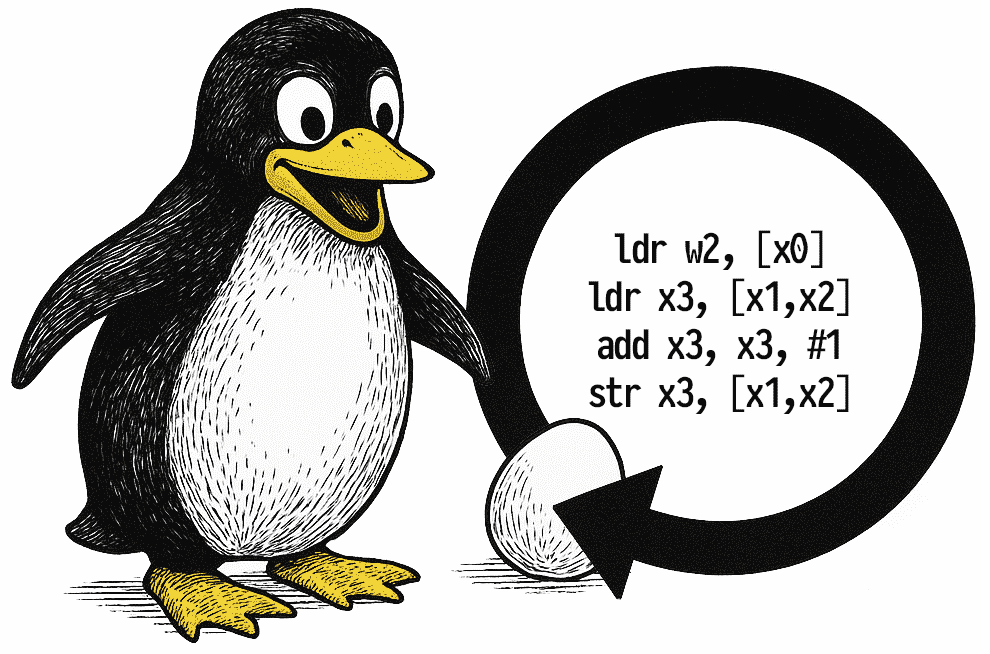
Restartable Sequences: A Linux Kernel Feature for Lock-Free Thread-Safe Programming
This article explores restartable sequences (rseq), a Linux kernel feature introduced in version 4.18 (circa 2018) that enables creation of
 justine.lol·19h ago
Zig Days: Collaborative Full-Day Programming Events for the Zig Community
Zig Days are full-day collaborative programming events organized by the Zig community, typically held on Saturdays. Participants meet in the
Spectre Programming Language Documentation: A Contract-Based Approach to Safe Low-Level Systems Programming
Spectre is a contract-based programming language designed for safe low-level systems programming. It enforces correctness through type-level

A Grounded Conceptual Model for Ownership Types in Rust Programming
This article presents a grounded conceptual model for ownership types in Rust, the programming language known for memory safety without garb
 cacm.acm.org·1mo ago
Rail: A Self-Hosting Systems Programming Language with Pure-Rail TLS 1.3 Implementation
Rail is a self-hosting systems programming language that compiles itself without any C dependencies. The compiler is written in Rail and pro
 github.com·1mo ago
Solod: A Go Subset That Compiles to C for Systems Programming
Solod is a strict subset of the Go programming language that compiles to regular C code, designed for systems programming with manual memory
github.com·1mo ago