





















Buffer Size Considerations and Safety Implications in Zig's New I/O Writer Implementation
By
ibobev

A bagel you'd recommend to a friend without hedging.
Summary
The article discusses programming considerations for Zig's new std.Io.Reader and Writer interfaces, focusing on buffer size decisions and safety implications when writing to stdout. It examines the trade-offs between using fixed buffer sizes versus dynamic allocation, highlighting potential performance and safety concerns in different programming scenarios.
Key quotes
· 3 pulledIf we wanted to write a function that takes one of Zig's new *std.Io.Reader and write it to stdout
But what should the size of buffer be?
If it was a mission critical piece of code, maybe we'd bench
You might also wanna read


Experimental Thread-Like Processes: Multiple Executables in Shared Address Space
The article describes an experimental GitHub repository called 'threadprocs' that implements thread-like processes, allowing multiple execut
 github.com·2mo ago
CacheKit: High-Performance Cache Policies and Data Structures for Rust Systems
CacheKit is a Rust library providing high-performance cache replacement policies and supporting data structures for systems programming. It
github.com·4mo ago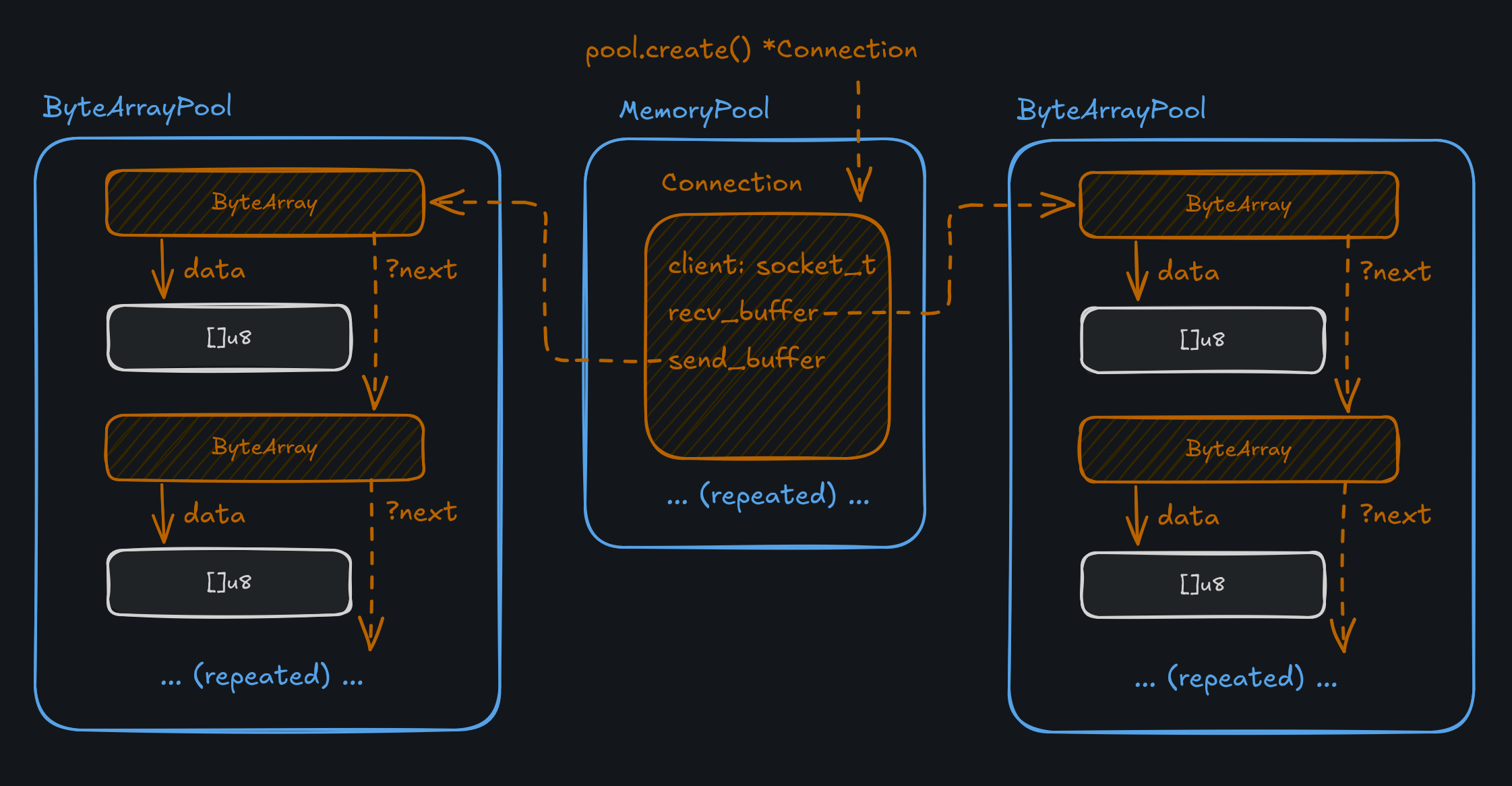
Building a Redis-Compatible Key/Value Server in Zig with Static Memory Allocation
The article discusses the development of 'kv', a Redis-compatible key/value server implemented in Zig programming language, focusing on the
Advanced Borrow-Checker Concepts in Rust Programming: Exploring New Reference Types
This article explores advanced concepts in Rust programming language's borrow-checker system, proposing new reference types and algebraic st
Rue: An Early-Stage Systems Programming Language Research Project for Memory Safety
Rue is an early-stage research project for a systems programming language that aims to provide memory safety without garbage collection, sim
Minimal Memory Allocator in C with sbrk and mmap Implementation
This article describes a minimal memory allocator written in C from scratch, using sbrk for small allocations and mmap for large allocations
github.com·6mo ago