





















BEAM and OTP: Why Erlang's 1986 Concurrency Model Keeps Being Rediscovered
By
linkdd

Crisp on the outside, thoughtful on the inside. A keeper.
Summary
The article explores why the BEAM virtual machine and OTP (Open Telecom Platform) architecture, originally developed for Erlang in 1986, continue to be relevant and frequently reinvented in modern distributed systems. It explains how BEAM's process-based concurrency model with isolated state, message passing, and supervisor hierarchies solves fundamental problems in building reliable, concurrent systems. The piece contrasts BEAM/OTP with other concurrency approaches like async/await, threads, and actor models, highlighting how Erlang's runtime-level implementation provides inherent advantages that keep being rediscovered by the AI and distributed systems communities.
Key quotes
· 4 pulledEvery few months, someone in the AI or distributed systems space announces a new framework for running concurrent, stateful agents. It has isolated state. Message passing. A supervisor that restarts things when they fail. The BEAM languages communities watch, nod, and go back to work.
This keeps happening because process-based concurrency solves a genuinely hard problem, and the BEAM virtual machine has been solving it since 1986. Not as a library. Not as a pattern you adopt. As the runtime itself.
Thirty thousand people saw that and a lot of them felt it.
What makes BEAM and OTP different from async/await, threads, and actors. Process isolation, supervisors, and why Erlang's model keeps winning 40 years later.
You might also wanna read

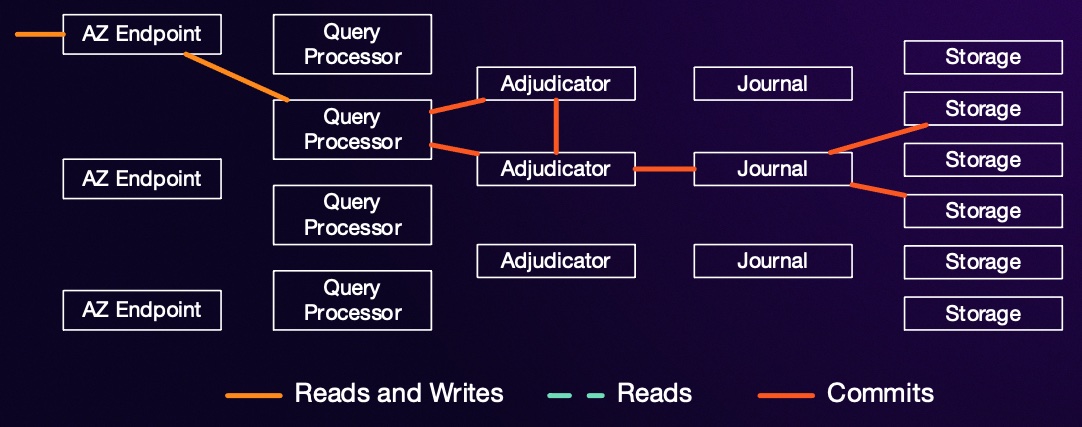
The Case for Strong Consistency in Distributed Systems
The article argues against eventual consistency in distributed systems, advocating for strong consistency instead. The author shares persona

Heartbeat Mechanisms in Distributed Systems: Ensuring Node Health and Reliability
The article discusses heartbeat mechanisms in distributed systems, which are essential for detecting node failures and ensuring system relia
 arpitbhayani.me·6mo ago
Optimizing .NET APIs for High Throughput: Techniques for 1M Requests Per Minute
Article discusses techniques for designing high-throughput .NET APIs capable of handling 1M requests per minute. It covers horizontal scalin
 blog.elmah.io·22h ago
SQLite as a Viable Alternative for Durable Workflow Execution
The article argues that SQLite can replace complex orchestration systems for durable workflow execution in many cases. It builds on DBOS's a

JWT vs Opaque Tokens: A Technical Comparison for API Security Architecture
This article compares JWT (JSON Web Tokens) and opaque tokens for API security, clarifying the common confusion between bearer tokens and JW
 nordicapis.com·2d ago
Agent Memory Is Distributed State Management, Not Magic
The article argues that "agent memory" in AI systems is fundamentally just distributed state management rebranded. It draws parallels betwee