





















AWS Applies Random Graph Theory to Optimize Data Center Network Design
By
StartupHub.ai

Hot, fresh, and worth queueing round the block for.
Summary
Amazon Web Services (AWS) is applying random graph theory principles to design more efficient and resilient data center network infrastructures. The approach aims to optimize network topology to handle surging AI demand, improve performance, and enable better scaling of cloud infrastructure.
Key quotes
· 3 pulledAmazon Web Services (AWS) is employing advanced mathematical concepts to architect its sprawling data centers.
Specifically, the cloud giant is applying principles of random graph theory to design more efficient network infrastructures.
Surging AI Demand leads to Data Center Needs.
You might also wanna read

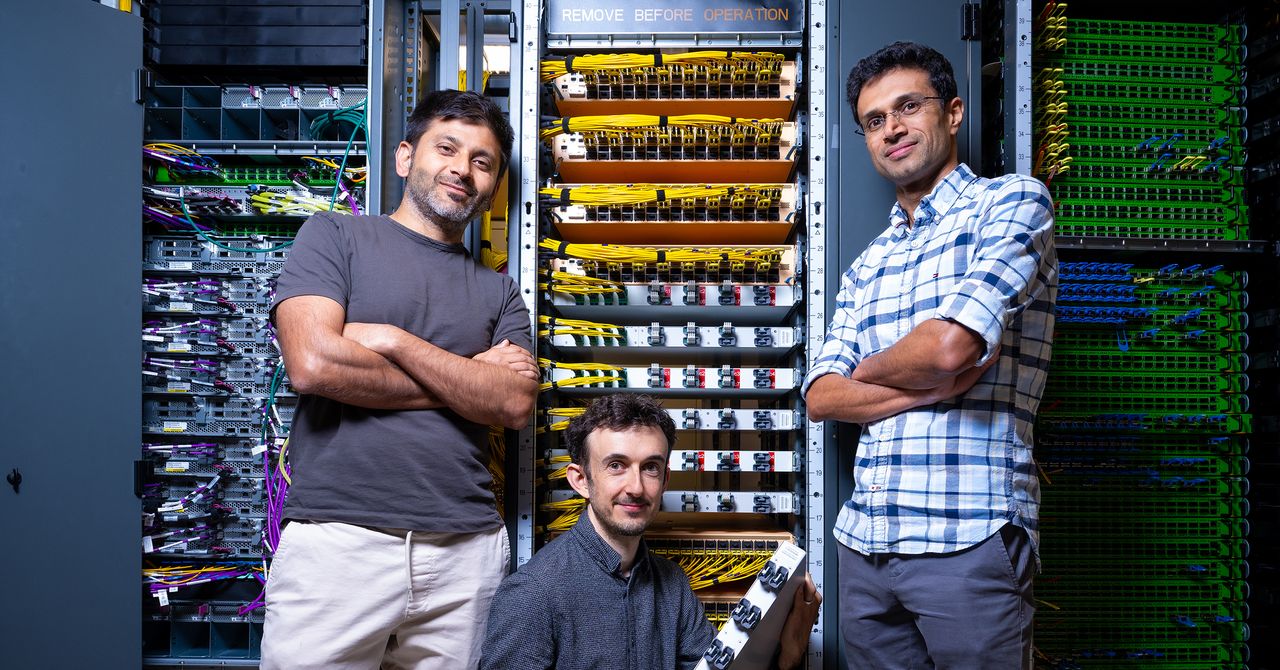
Amazon claims networking breakthrough with quasi-random data center design, boosting speed and efficiency
Amazon claims a major breakthrough in data center networking using a "quasi-random" design that combines structured and random network archi
 wired.com·3h ago
Amazon Textract achieves PCI DSS certification with enhanced table and form data extraction
Amazon Web Services announces that Amazon Textract, its AI-powered document text and data extraction service, has achieved PCI DSS certifica
 aws.amazon.com·18h ago
Snowflake commits $6B to AWS for AI and Graviton compute infrastructure
Snowflake has committed $6 billion over five years to Amazon Web Services (AWS) for Graviton compute and GPU-accelerated EC2 instances, mark
 bit.ly·1d ago
AWS Budgets' Multi-Hour Delay Fails to Catch Rapid Bedrock Cost Spikes
This article exposes a critical flaw in AWS Budgets: it can have up to an 8-hour (or more) delay in alerting users about AWS Bedrock spendin
 blog.llmcap.io·1d ago
AWS redesigns cloud infrastructure for AI agent traffic as machines reshape the internet
Amazon's AWS is redesigning its cloud infrastructure to accommodate AI agents, which behave very differently from human users. Unlike humans
 share.google·1d ago
AWS redesigns cloud infrastructure for AI agent traffic as machines reshape the internet
Amazon's AWS is redesigning its cloud infrastructure to accommodate AI agents, which behave very differently from human users. Unlike humans
share.google·1d ago