





















Study Suggests Scientific Innovation Declines as Researchers Age
By
Brajeshwar

Hot, fresh, and worth queueing round the block for.
Summary
This article examines how scientific innovation declines with researcher age, suggesting that older, established scientists tend to produce less disruptive work compared to younger researchers. It references Einstein's groundbreaking 1905 papers as an example of early-career brilliance, and explores the systemic issue of aging scientists blocking progress in their fields. The piece argues that science advances "one funeral at a time" as new ideas struggle to gain acceptance until older gatekeepers retire or pass away.
Key quotes
· 4 pulledA vanishingly small number of field-leading experts has the propensity to shape knowledge.
They who win the Nobels. They who secure the multi-year, millions-of-dollars grants. They who rewrite the textbooks.
Even the giants seem to have something of a use-by date.
In one year of publishing—1905—Albert Einstein turned physics on it
You might also wanna read

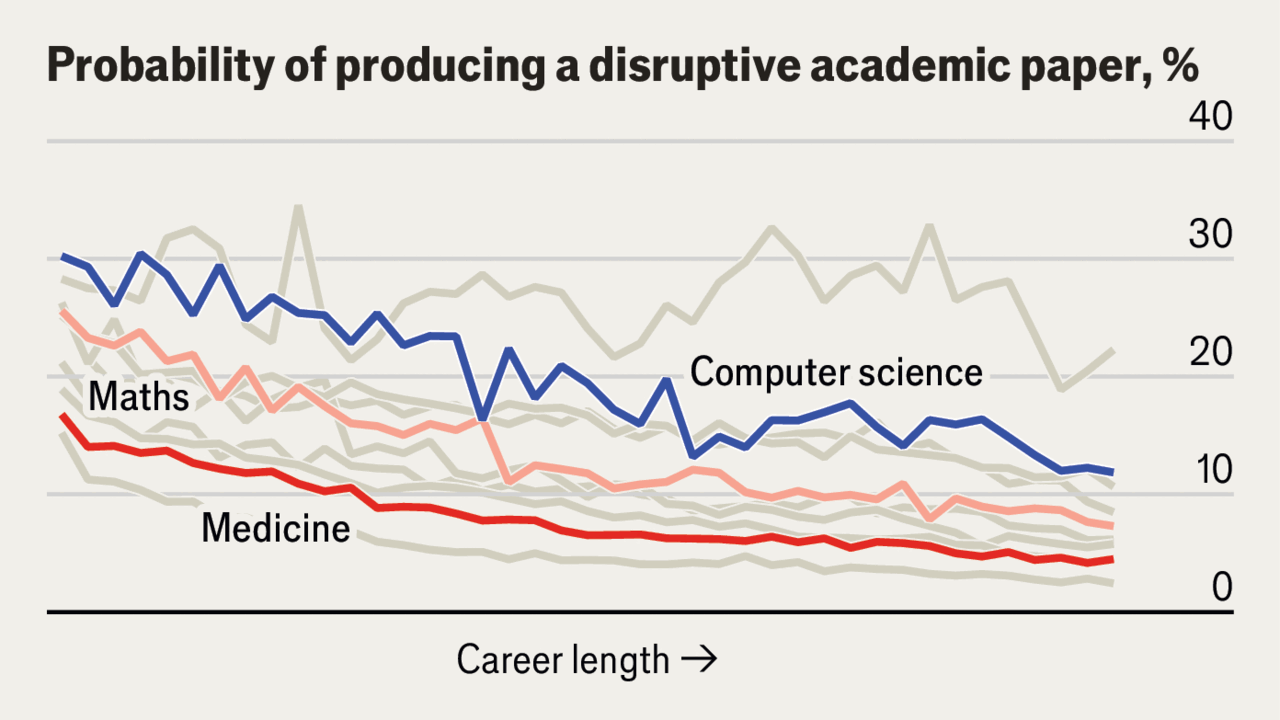
Study of 12.5 million scientists links aging researcher workforce to declining scientific breakthroughs
A new study analyzing 12.5 million scientists finds that researchers become less likely to produce disruptive, transformative work as they a
 economist.com·2d ago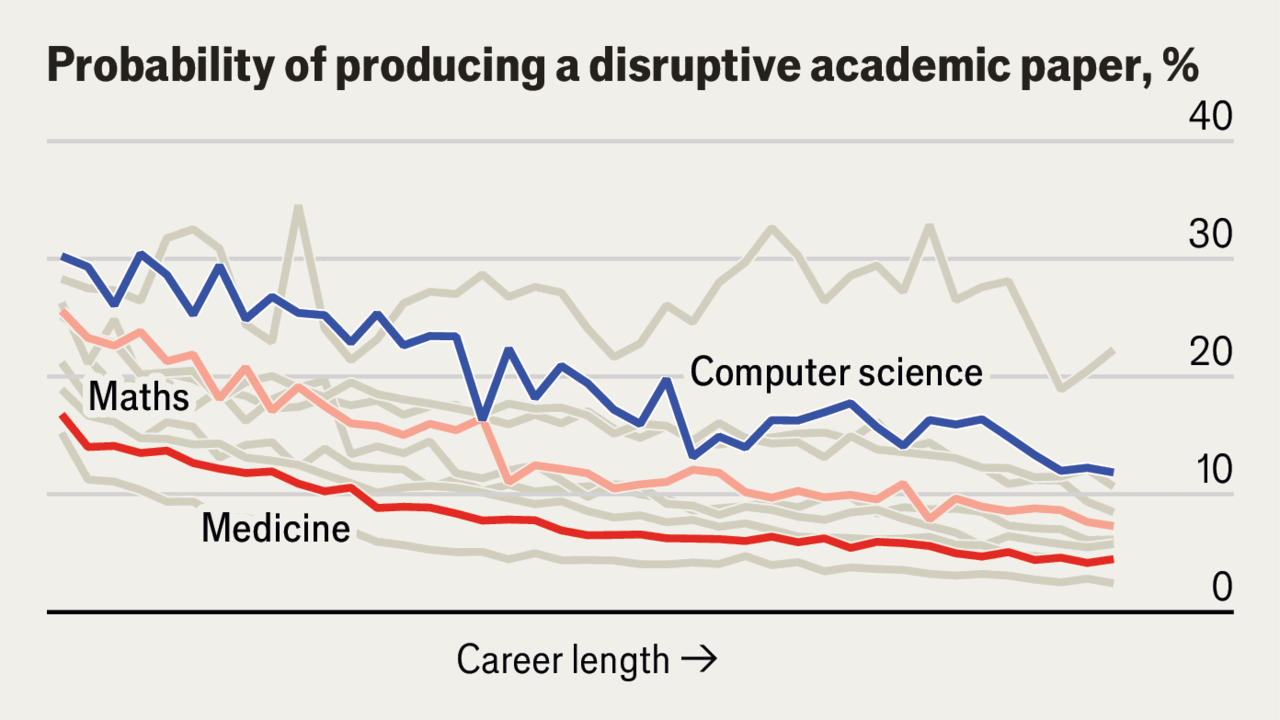
Study links aging scientific workforce to decline in breakthrough discoveries
A new study analyzing 12.5 million scientists finds that researchers become less likely to produce disruptive, transformative work as they a
 economist.com·4d ago