





















Scientists explore the evolutionary purposes of animal play beyond survival instincts
By
Jason Bittel

Front-window bakery material. Catches the eye, delivers the goods.
Summary
The article explores animal play behaviors that go beyond survival instincts, examining examples like crows snowboarding on plastic lids and orcas wearing dead salmon as hats. It discusses how scientists are uncovering the deeper evolutionary purposes of play across diverse species, from birds and mammals to reptiles, fish, cephalopods, and insects, suggesting that play may serve important developmental, social, and cognitive functions beyond mere survival.
Key quotes
· 3 pulledWe tend to think of animals as survival machines, their every action designed to help them avoid threats, fulfill needs, and find mates.
What are we to make of a crow that repeatedly places a discarded plastic lid at the top of a snowy roof and then rides it down the pitch like a snowboard?
What evolutionary purpose could these behaviors possibly serve?
You might also wanna read

Wild Orcas Display Cross-Species Cooperation by Bringing Humans Food
Wild orcas have been observed offering humans pieces of fish, marine mammals, and seaweed in a rare form of cross-species cooperative behavi
The Onion·10mo ago
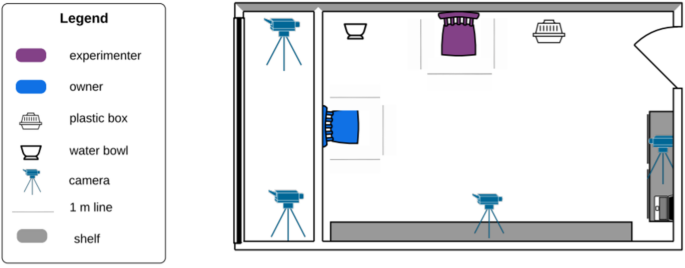
Study Finds Dogs Can Develop Addictive-like Behaviors to Toy Play
This scientific study investigates whether domestic dogs with extreme motivation for toy play exhibit addictive-like behavioral traits simil
 nature.com·8mo ago
Study Finds Bonobos Capable of Human-Like Pretend Play, Accompanied by Satirical News Snippets
The article appears to be a satirical piece that combines a legitimate scientific study about bonobo pretend play with absurd, unrelated new
The Onion·3mo ago
Raccoon Intelligence Research: How Their Problem-Solving Skills Illuminate Animal Cognition and Human Intelligence
The article explores raccoon intelligence through scientific research, examining how their remarkable problem-solving abilities - including
 theconversation.com·4mo ago
Exploring the Space of Intelligences: Animal vs. AI Optimization
The article explores the concept of intelligence as existing in a vast space, with animal intelligence representing only one point in this c
 karpathy.bearblog.dev·6mo ago
A Cognitive Science-Inspired Framework for Autonomous AI Learning
This article examines the limitations of current AI models in achieving autonomous learning and proposes a new learning architecture inspire
 arxiv.org·2mo ago