





















How apocalyptic thinking has infected modern capitalism and markets
By
The Economist

Looks the part, but the middle's still raw. Chew with caution.
Summary
The article draws a parallel between Charles Mackay's historical accounts of mass delusions (tulip mania, South Sea bubble) and modern apocalyptic thinking in business and markets. It suggests that millenarian thinking—the "epidemic terror of the end of the world"—now permeates contemporary capitalism, implying that today's business world is gripped by irrational fears and doom-laden narratives reminiscent of historical crowd panics.
Key quotes
· 3 pulledCharles Mackay's 'Extraordinary Popular Delusions and the Madness of Crowds' (1841) is reviled by historians and revered among traders.
Those wanting to understand business in the 21st should instead turn to Mackay's chapter on the 'epidemic terror of the end of the world'.
Millenarian thinking permeates business and markets
You might also wanna read

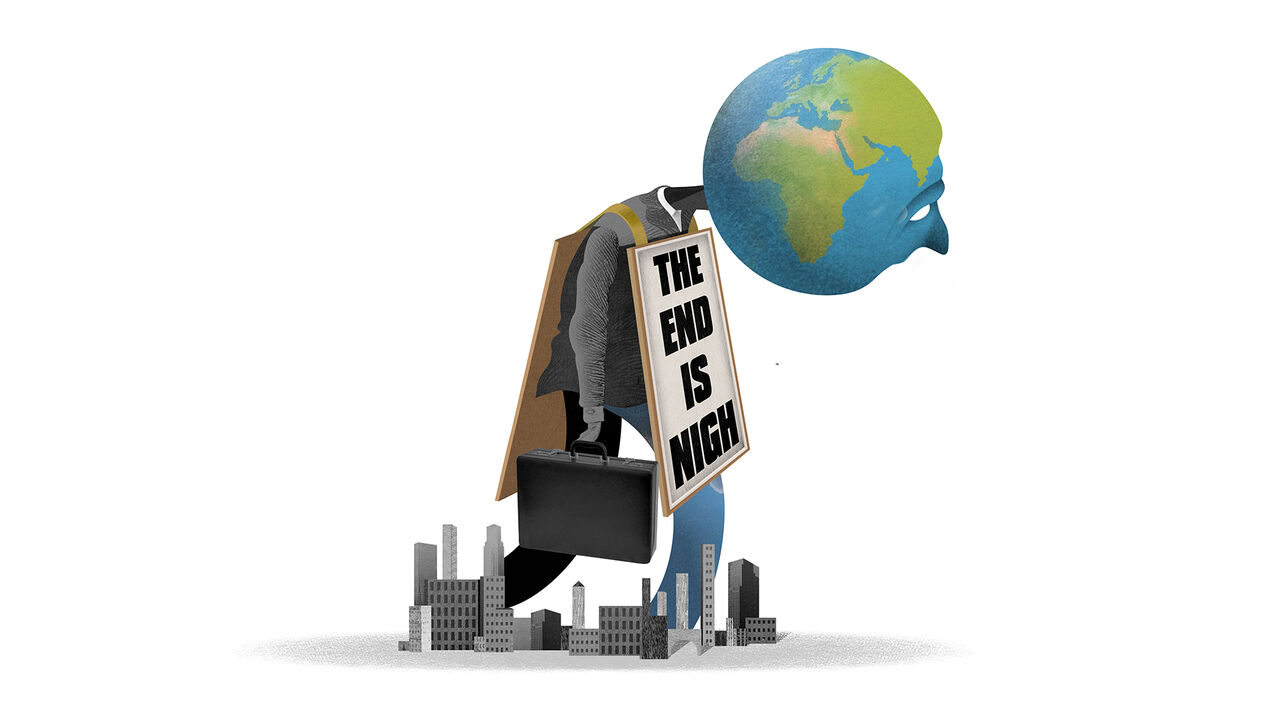
American capitalism has taken an apocalyptic turn
 economist.com·6d ago
Risk Expert Analyzes Historical Patterns of Societal Collapse and Current Existential Threats
Risk expert Luke Kemp uses archaeological evidence from the British Museum's Jebel Sahaba skeletons to argue that human societies have faced
 noemamag.com·7mo ago
Historian Clifton Crais Argues Modern Era Should Be Defined by Mass Violence, Not Anthropocene
The article discusses historian Clifton Crais's argument in his book 'The Killing Age' that the modern era should be defined not as the Anth
 newstatesman.com·3mo ago
Cory Doctorow Critiques AI Investment Bubble and Links Austerity to Fascism
Cory Doctorow critiques the massive investment in AI technology, arguing that it represents a form of 'AI psychosis' among billionaires and
 pluralistic.net·1mo ago
The Persistent Predictions of the Web's Demise: How 30 Years of Doomsaying Has Been Proven Wrong
The article examines the recurring predictions about the death of the web, focusing on George Colony, a prominent analyst who has spent 30 y
 tedium.co·6mo ago
AI's Overhyped Reality: A Critical Perspective on Technology Bubbles and Catastrophic Potential
The article presents a critical perspective on AI technology after three years of immersion, arguing that AI is overhyped and potentially he
 chrbutler.com·6mo ago