





















Algorithm for Detecting Overlapping Intervals in Programming
By
birdculture

Master baker tier. Every paragraph earns its place on the tray.
Summary
This technical blog post explains how to detect overlapping intervals in programming, covering interval representation and the mathematical logic for overlap detection. The article emphasizes that checking for non-overlap is simpler than checking for all possible overlap scenarios, and provides practical approaches for working with intervals in various domains like time ranges, scheduling, and geometric computations.
Key quotes
· 3 pulledA key insight when working with intervals is that checking for the absence of an overlap is often much simpler than checking for all the ways an overlap can occur.
An interval represents a range between two points, and could be in a continuous or discrete domain.
This post will first cover how to represent intervals in code, then dive into the logic for detecting overlaps.
You might also wanna read
Overview of Maze Generation Algorithms for Programmers
The article presents an overview of various maze generation algorithms used in programming, including Recursive Backtracking, Eller's Algori

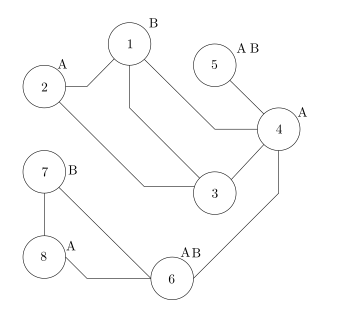
Understanding Biconnected Components: Algorithmic Implementation and Applications in Competitive Programming
This article provides an in-depth technical explanation of biconnected components (BCCs) in graph theory, focusing on their importance in co
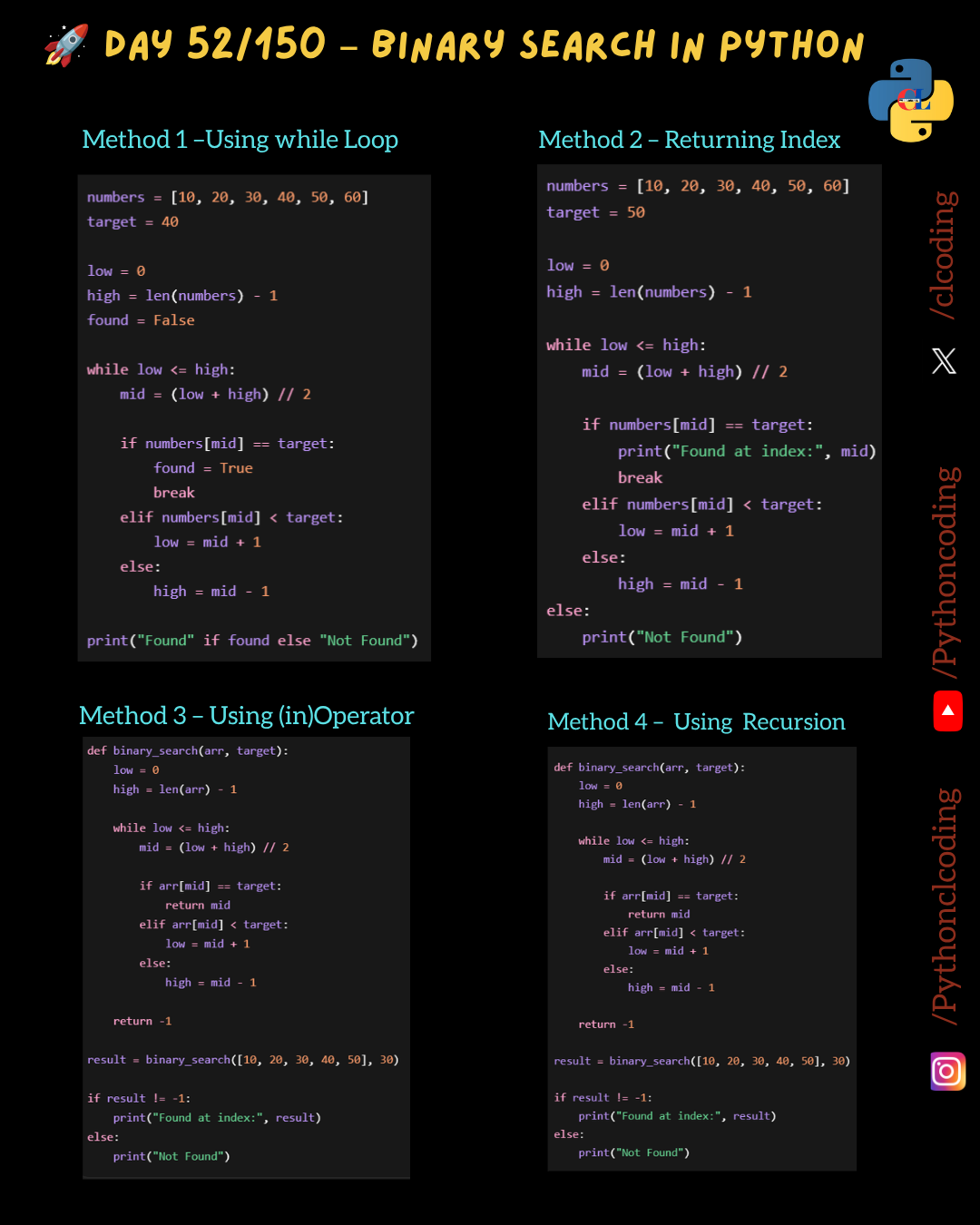
Binary Search in Python: Iterative Implementation Using a While Loop
This article explains the Binary Search algorithm in Python, covering its iterative implementation using a while loop. It highlights that bi
 clcoding.com·2d ago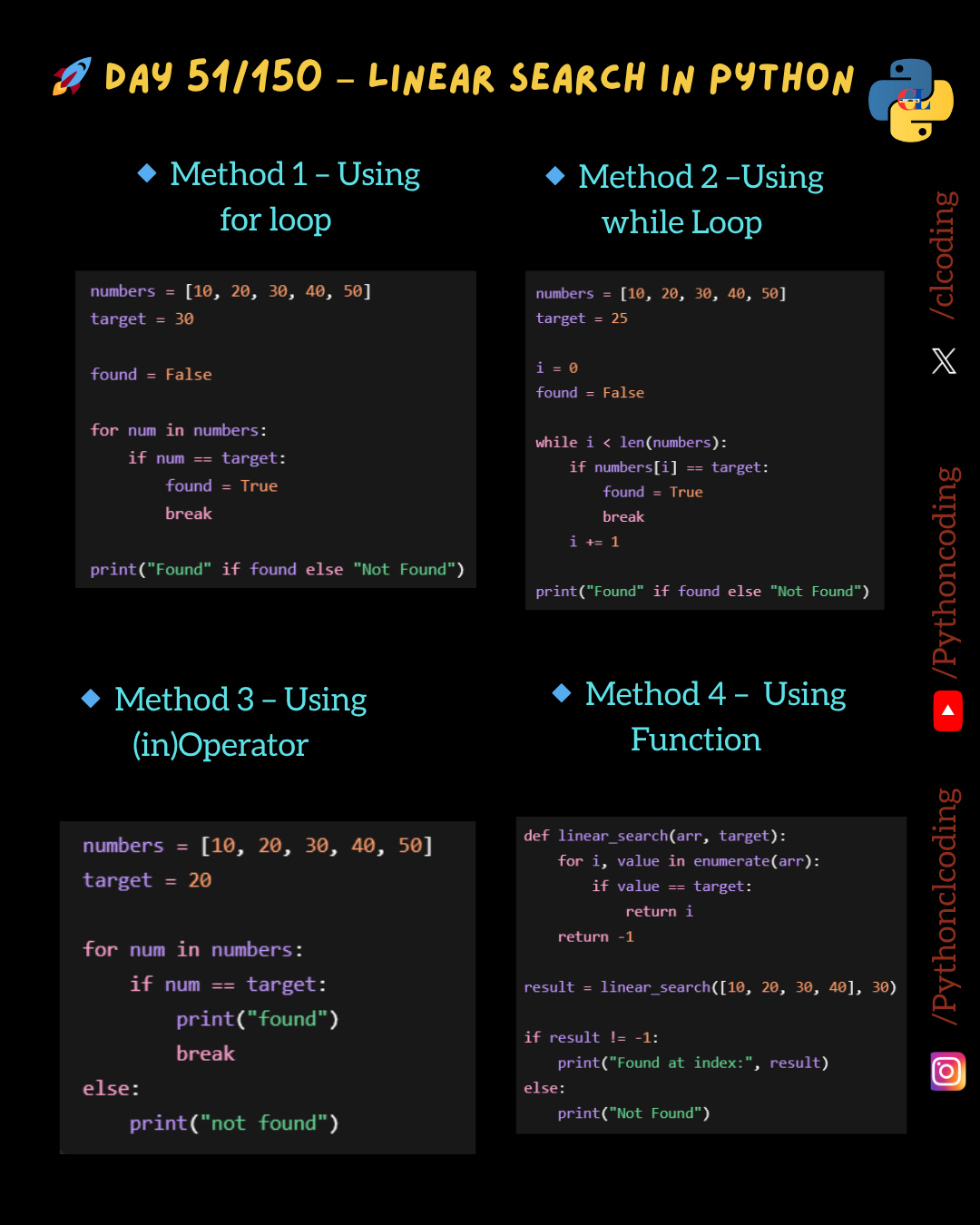
Day 51/150 – Linear Search in Python: Implementation Tutorial
A tutorial on implementing Linear Search in Python, covering two methods (for loop and while loop) for searching elements in a list. Part of
clcoding.com·4d agoThe History of Pipes, Forks, and Zombies in Unix Systems
This article discusses the history and concept of pipes in Unix systems, focusing on Doug McIlroy's original vision of coupling programs lik

A 7-line interpreter: Implementing a functional programming language in minutes
The article presents a minimal 7-line interpreter for a functional programming language, demonstrating the eval/apply design pattern from St