





















AI agents accelerate catalyst discovery from simulation to industrial scale-up
By
Andy Extance

Fresh out the oven, still warm. Top of the tray.
Summary
AI agents are revolutionizing catalyst research by automating tasks that previously took computational chemists days, completing them in minutes. Tools like 'El Agente' serve as integrated AI assistants, enabling experimentalists to generate and test hypotheses more easily. This technology promises to dramatically shorten catalyst discovery and deployment timelines from the current 10–25 years by improving simulations, guiding experiments, and supporting autonomous lab systems. Progress depends heavily on high-quality, standardized datasets, with major initiatives like Open Catalyst, Nomad, and OQM driving the field forward. The article explores how researchers from small academic groups to tech giants like Meta, Google, and Nvidia can benefit from these advances.
Key quotes
· 3 pulledAI agents are transforming catalyst research, automating tasks once handled by computational chemists and enabling experimentalists to generate and test hypotheses more easily.
The technology promises to dramatically accelerate catalyst discovery and deployment, potentially shortening timelines that currently span 10–25 years.
Progress depends heavily on high-quality, standardised datasets, with major initiatives like Open Catalyst, Nomad, and OQM driving the field forward.
You might also wanna read


OpenAI and Molecule.one demonstrate GPT-5.4-powered AI chemist improving medicinal chemistry reactions
OpenAI and Molecule.one demonstrate a near-autonomous AI chemist using GPT-5.4 that successfully improved a challenging reaction in medicina
 openai.com·16h ago
Paper2Agent: Converting Research Papers into Interactive AI Agents for Scientific Discovery
Paper2Agent is an automated framework that converts research papers into interactive AI agents, transforming static research outputs into ac
 arxiv.org·8mo ago
Alibaba's Tongyi DeepResearch: Open-Source AI Research Agent Matches OpenAI Performance
Alibaba's Tongyi DeepResearch is presented as the first fully open-source web agent that achieves performance comparable to OpenAI's DeepRes
 tongyi-agent.github.io·7mo ago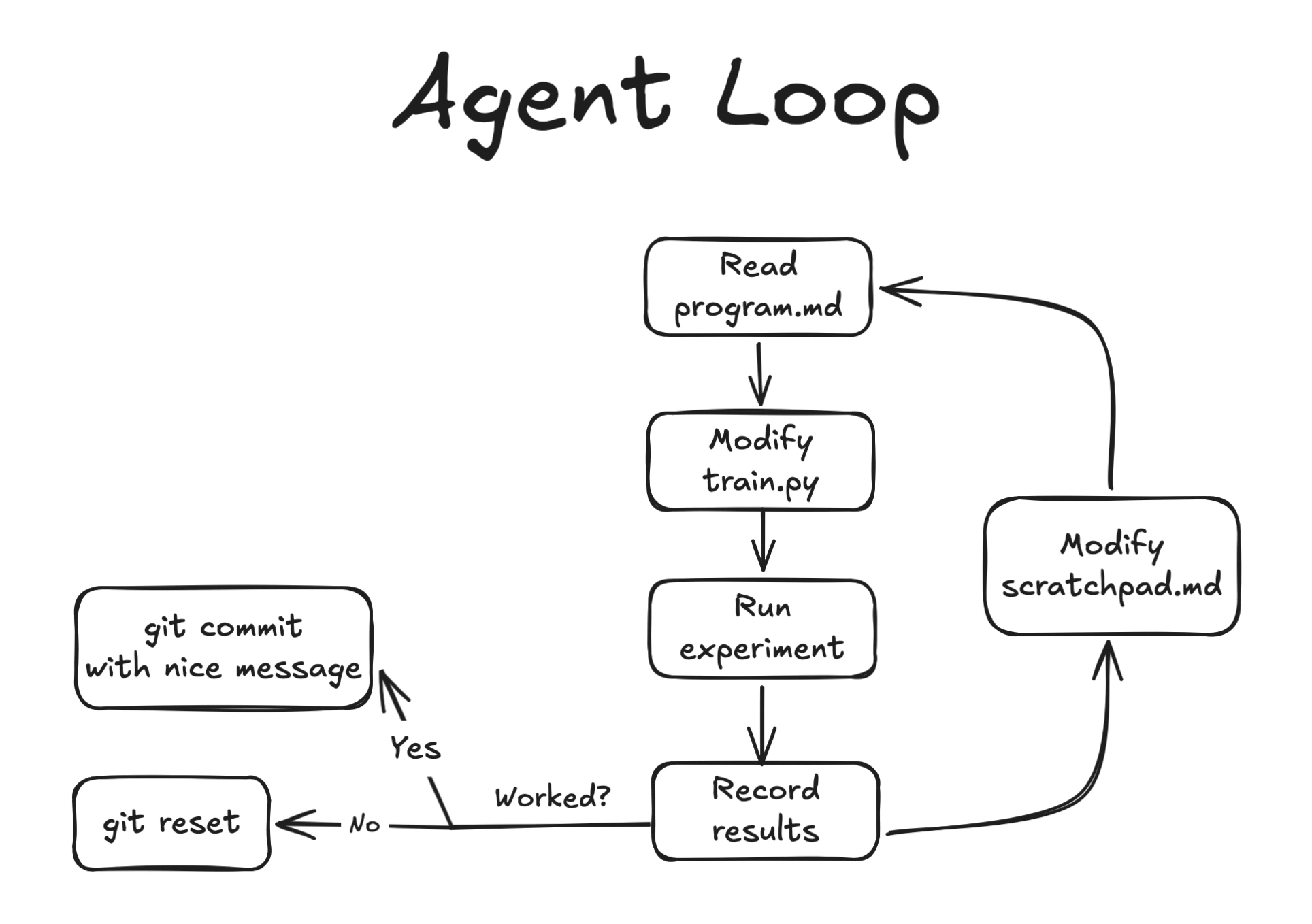
Experimenting with AI-Powered Research Automation: Applying Karpathy's Autoresearch to Legacy eCLIP Code
The author describes experimenting with Andrej Karpathy's Autoresearch framework by applying it to their old eCLIP research code. They set u
 ykumar.me·2mo ago
Parallel AI Agents: A Transformative Breakthrough in Software Development
The article presents a perspective from an experienced industry professional who believes parallel AI agents represent a fundamental breakth
 morningcoffee.io·9mo ago
The Evolution of AI: From Static Benchmarks to Inference-Time Search for Autonomous Agents
The article explores the shift from traditional AI benchmarking to inference-time search as the future of AI development. It discusses how c
 adlrocha.substack.com·5mo ago