





















AI agent memory libraries borrow cognitive science terms without the underlying architecture
By
brgsk

Front-window bakery material. Catches the eye, delivers the goods.
Summary
This article critically examines how AI agent memory libraries borrow terminology from cognitive science (episodic, semantic, procedural memory) without implementing the actual architectural distinctions those terms imply. It traces the origin of these terms to Endel Tulving's 1972 work and argues that most AI "memory" systems are actually narrower constructs—better described as storage, retrieval, or context management. The piece bridges cognitive science concepts with AI engineering practices, highlighting the gap between the vocabulary used and the actual engineering implemented.
Key quotes
· 3 pulledthe terminology comes from a 1972 chapter by Endel Tulving. he argued that what people had been treating as one thing — memory — w
a library can have a procedural field that uses the same storage and retrieval as semantic — a label, not a separate system.
the deeper slip is the word memory itself: most of what these libraries build is narrower than that, and the narrower term sharpens the problem.
You might also wanna read


Agent Memory Is Distributed State Management, Not Magic
The article argues that "agent memory" in AI systems is fundamentally just distributed state management rebranded. It draws parallels betwee
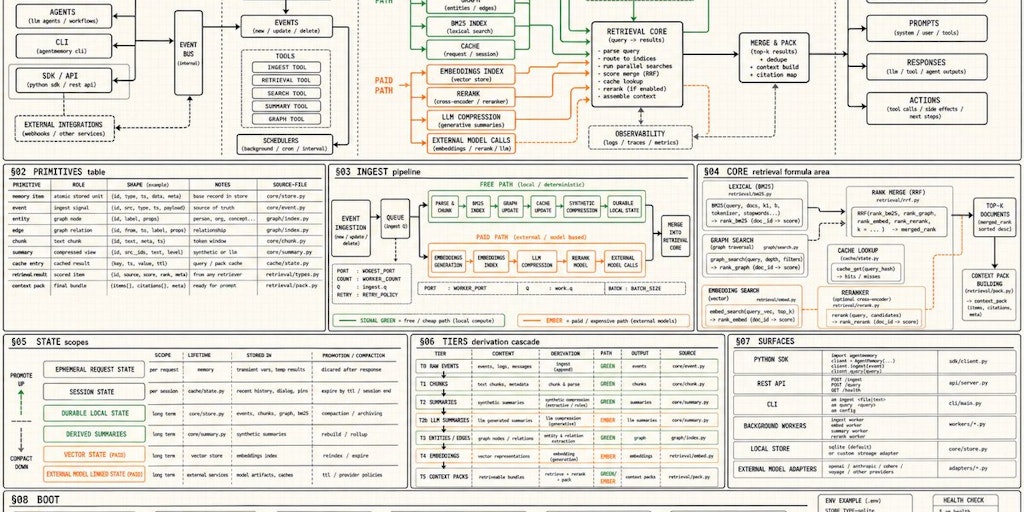
AgentMemory: Open-source persistent memory tool for AI coding agents
AgentMemory is an open-source tool that gives AI coding agents (like Claude Code, Codex, Cursor, etc.) persistent memory across sessions, so
 Product Hunt·20d ago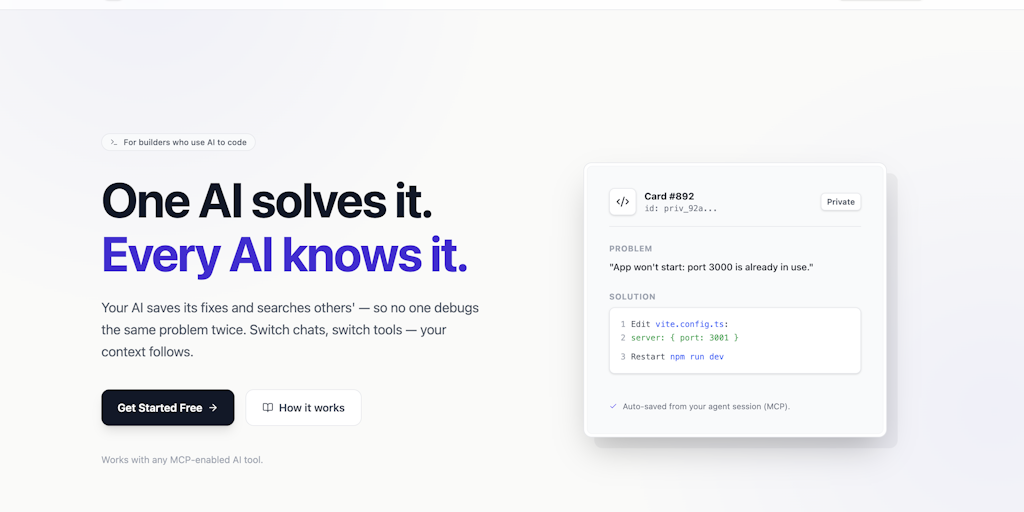
AskAIBase: Memory Infrastructure for AI Coding Agents
AskAIBase is a memory infrastructure platform for AI coding agents that saves successful debugging or building solutions as structured cards
Product Hunt·3mo ago
DeltaMemory: A Persistent Memory Layer for AI Agents That Learns Over Time
DeltaMemory is a new AI memory layer designed to solve the problem of AI agents forgetting information between sessions. Unlike vector datab
Product Hunt·3mo ago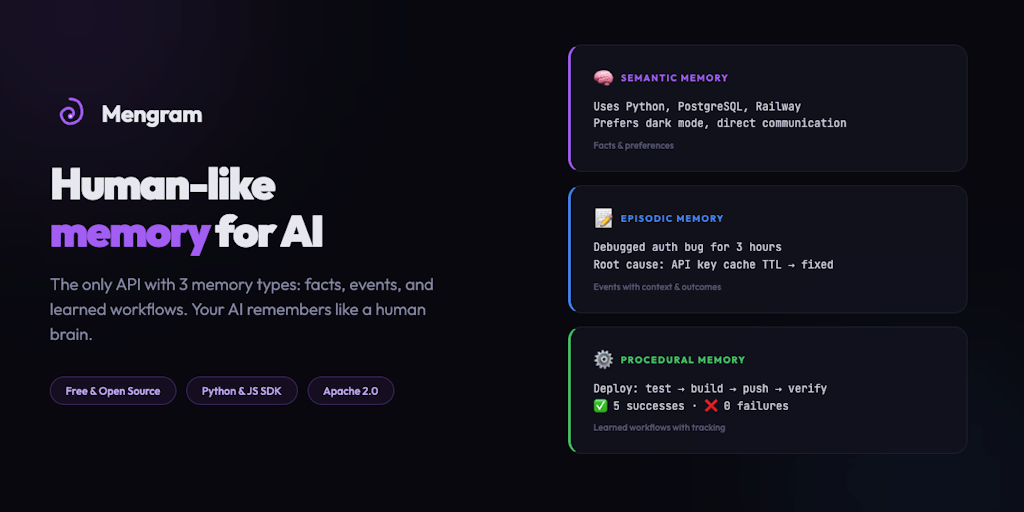
Mengram AI Memory API: Semantic, Episodic, and Procedural Memory Extraction
Mengram is an AI memory API that automatically extracts three types of memory: semantic (facts), episodic (events), and procedural (learned
Product Hunt·3mo ago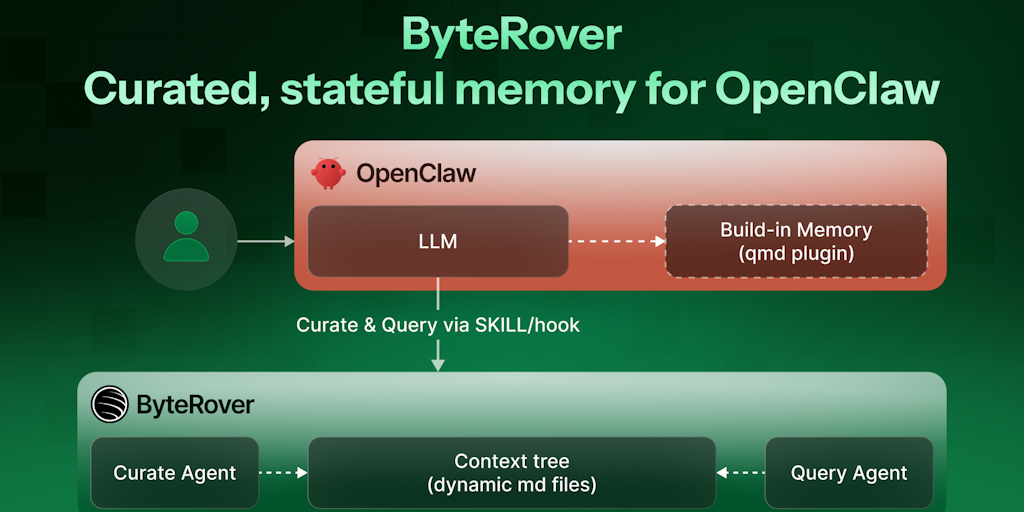
ByteRover: File-Based Memory Layer for AI Agents with 92.2% Retrieval Accuracy
ByteRover is a fully local, file-based memory layer for AI agents that offers 92.2% retrieval accuracy, cloud portability, and built-in vers
Product Hunt·2mo ago