





















New Early Miocene marsupial species discovered in Queensland's Riversleigh World Heritage Area
By
Timothy James Churchill (a1), Michael Archer (a1), Suzanne J. Hand (a1) and Robin M. D. Beck (a2)

A baker's-dozen of insight crammed into one ring.
Summary
Fossil discoveries from the Riversleigh World Heritage Area in northwestern Queensland, Australia, have uncovered three previously unknown species of small, insect-eating marsupials that lived about 18 million years ago. Named Phantasmodon travouilloni, Phantasmodon minuferox, and Keeunidae gen. and sp. indet., these animals ranged from shrew- to mouse-sized. Their teeth share distinctive features with older Australian species and with Djarthia murgonensis, the continent's oldest known marsupial, recovered from 55-million-year-old deposits in Murgon, southern Queensland. The study establishes a new metatherian order called Keeunamorphia.
Key quotes
· 3 pulledFossil discoveries from the Riversleigh World Heritage Area in northwestern Queensland, Australia, have uncovered three previously unknown species of small, insect-eating marsupials that lived about 18 million years ago.
Named Phantasmodon travouilloni, Phantasmodon minuferox, and Keeunidae gen. and sp. indet., these animals ranged from shrew- to mouse-sized.
Their teeth share distinctive features with older Australian species and with Djarthia murgonensis, the continent's oldest known marsupial, recovered from 55-million-year-old deposits in Murgon, southern Queensland.
You might also wanna read


New Australian Bee Species Discovered with Horn-Like Facial Projections
Australian researchers have discovered a new species of native bee with distinctive horn-like projections on the female's face, earning it t
 The Onion·7mo ago
Live Australian Brushtail Possum Found Hiding Among Stuffed Animal Toys in Tasmanian Airport Gift Shop
A traveler browsing in a Tasmanian airport gift shop discovered a live Australian brushtail possum hiding among the plush animal toys on dis
The Onion·2mo ago
Extinction of the Christmas Island Shrew: A Tiny Mammal Lost Forever
The article documents the extinction of the Christmas Island shrew (Crocidura trichura), a tiny mammal that once inhabited Christmas Island
 news.mongabay.com·7mo ago
Study Shows Mammals Independently Evolved to Eat Ants and Termites Multiple Times Since Dinosaur Age
A study reveals that mammals evolved into ant- and termite-eaters independently at least a dozen times over the past 100 million years, adap
news.njit.edu·11mo ago/https://tf-cmsv2-smithsonianmag-media.s3.amazonaws.com/filer_public/f0/89/f089f29e-ca4a-4fa6-befc-652ff8bbd8b1/gloza-rausch_et_al_rat_vs_ba)
Brown Rats Observed Hunting and Eating Bats in Northern Germany Using Two Different Strategies
Researchers in northern Germany have documented brown rats using two distinct hunting strategies to catch and eat bats at urban hibernation
 smithsonianmag.com·6mo ago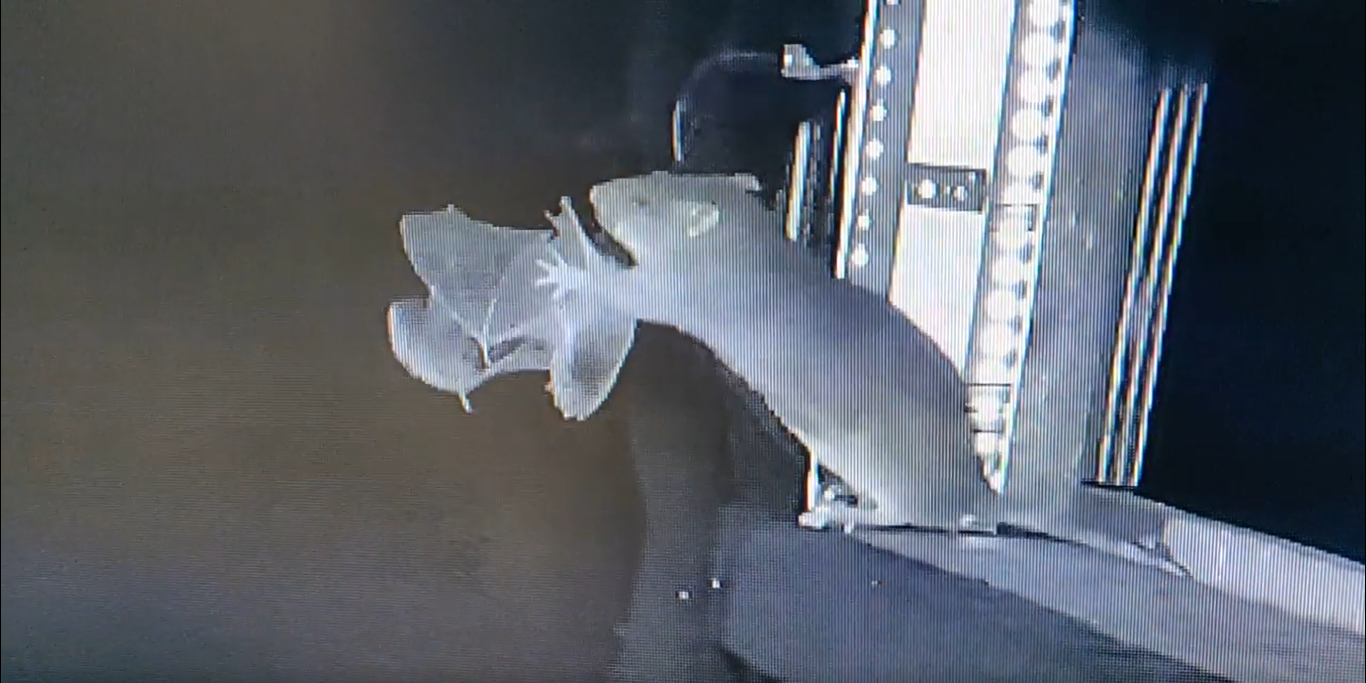
Brown rats documented hunting bats mid-flight in German caves for the first time
Researchers in northern Germany have documented brown rats (Rattus norvegicus) actively hunting and catching bats mid-flight — the first kno
 scienceclock.com·5mo ago