





















Review: "1873" by Liaquat Ahamed — A Financial History of the First Great Depression and Its Modern Parallels
By
Radical Grammar

Sesame, salt, and substance. A flagship bake.
Summary
A review of Liaquat Ahamed's new book "1873," which examines the rise and fall of the first era of globalization in the 19th century, focusing on the economic collapse of 1873 and its parallels to modern financial crises. The book centers on the Rothschild family and how an unprecedented mid-century boom gave way to a global financial crisis that reshaped the modern world.
Key quotes
· 3 pulledThe Rothschilds, the First Great Depression, and the Making of the Modern World
The new book by financial historian Liaquat Ahamed charts the rise and cataclysmic fall of the world's first true era of globalization
focusing on a forgotten nineteenth-century economic collapse with profound modern parallels
You might also wanna read


Financial Decline of Empires: How Debt Undermined Britain and Threatens America
The article analyzes the decline of empires through the lens of financial sustainability, comparing the British Empire's fall due to unsusta
 nitishastra.substack.com·4mo ago
Tulip mania: The 1630s Dutch financial bubble where bulbs cost more than houses
This article explores the historical phenomenon of tulip mania in the 1630s Netherlands, widely considered the world's first financial bubbl
 dutchreview.com·10d ago
How counterfeit money helped build early America's economy
Stephen Mihm's "A Nation of Counterfeiters" explores how counterfeit money played a surprisingly constructive role in early American economi
 mail.blockworks.com·3d ago
Understanding the Efficient Market Hypothesis: From Bachelier to Modern Finance
This article explores the Efficient Market Hypothesis (EMH), tracing its origins from Louis Bachelier's early 20th century work through its
 3quarksdaily.com·8mo ago
Examining the Necessity of Billionaires in Modern America
The article critically examines the necessity and impact of billionaires in society, challenging the Reaganomics "trickle-down" theory that
 bjhess.com·3d ago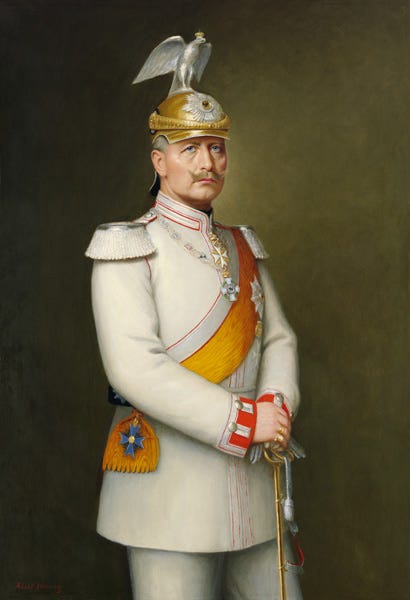
Rethinking History: How Incompetent Leaders Like Kaiser Wilhelm II Shape World Events
This article examines the "Great Man" theory of history (popularized by Thomas Carlyle) through the lens of Kaiser Wilhelm II, arguing that
 deadcarl.com·9d ago